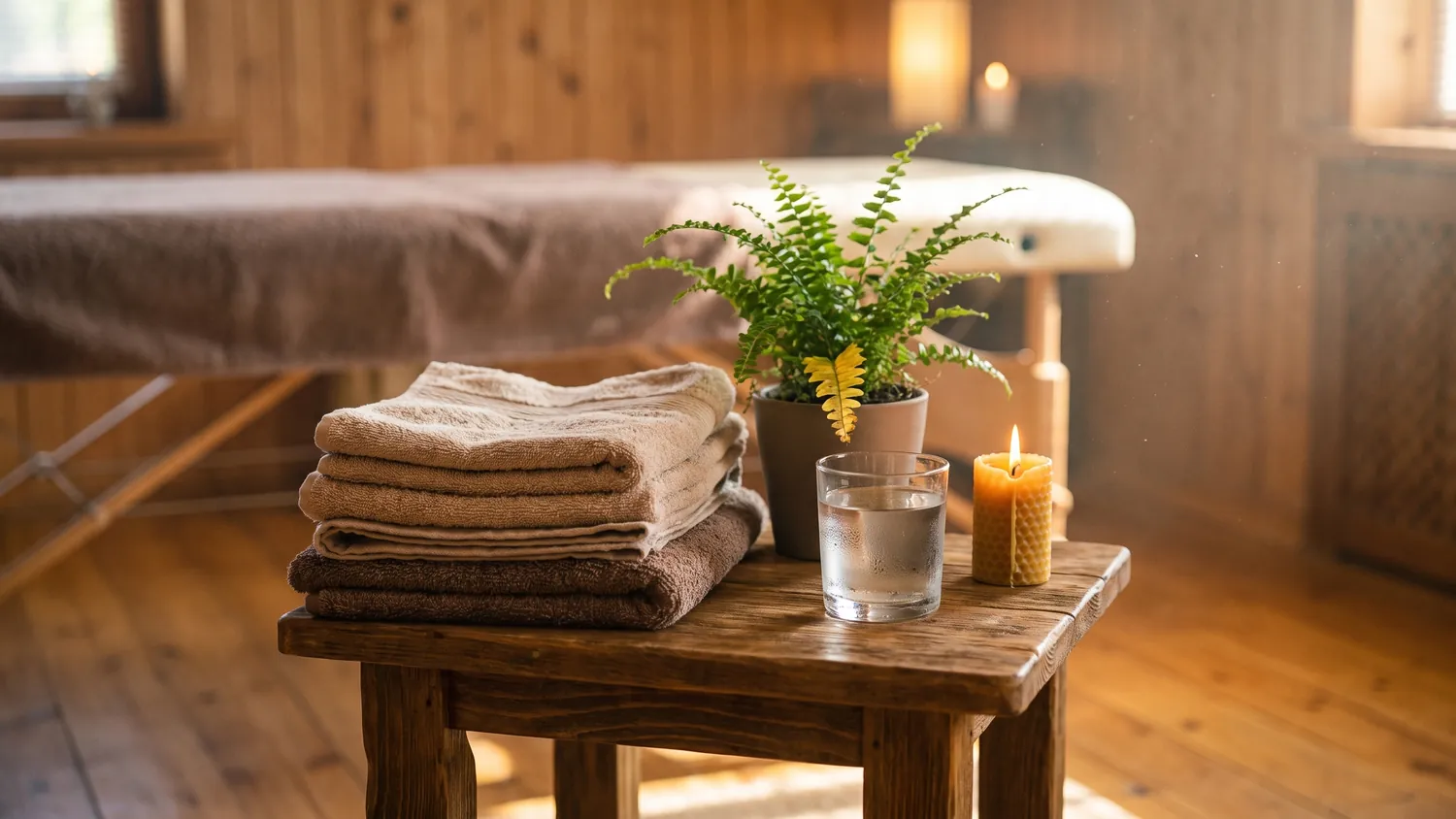
When was the last time you felt truly at ease in your own body? Not just fine, but relaxed, pain-free, and well rested. If that feeling seems out of reach, massage therapy might be the piece missing from your wellness routine.
Here is something worth knowing: about 30 million Americans visited a massage therapist in 2021, roughly one in nine adults. They were not all treating an injury or booking a spa day. Many were managing stress, working on their sleep, or looking after their long-term health.
Massage does measurable things inside the body, including lowering cortisol, improving circulation, and easing chronic muscle tension.
In this post, we break down why massage deserves a regular spot in your wellness routine: how it affects the body and mind, and how to get started without overcomplicating it.
Massage Therapy Is Not a Luxury, It Is a Wellness Essential
Think of massage therapy the way you think about regular exercise or a full night of sleep. It is not a reward for when life slows down. It is something you do because life does not slow down.
The numbers back this up. According to a Baylor University analysis of National Health Interview Survey data, one in nine U.S. adults visited a massage therapist in 2021, roughly 30 million people. That is a mainstream health behavior.
The reasons people go are split in a way that matters. 8.5 percent of Americans use massage for overall health and wellness, and 6.0 percent use it specifically for pain management. People are not only turning to massage after something goes wrong. Many are using it to help prevent that in the first place.
Still, about 89 percent of U.S. adults did not see a massage therapist that year, and massage is often treated as a splurge. It does not have to be. It sits in the same category as a gym membership or a good sleep routine: something the body actually needs.
Ashiatsu is one example of how broad the options have become. The sections ahead cover what regular massage can do for the body and mind.
It Lowers Stress at a Biological Level
Stress relief is not only a feeling. During a massage, many people notice their heart rate slow and their breathing deepen as the body starts to let go of tension.
The effect shows up in the research, too. A review of more than 30 studies published in the International Journal of Neuroscience found that massage reduced cortisol levels by an average of 31 percent. The same review documented increases in serotonin and dopamine, both linked to mood.
Lower cortisol is generally associated with better mood and less reactivity to everyday pressure. Regular sessions build on each other rather than starting from zero each time.
If stress is your main reason for booking, Swedish massage is a good starting point. Its long, flowing strokes make it the gentlest way to begin.
It Relieves Muscle Tension and Chronic Pain
Massage also works on pain at its source, not just the feeling of stress.
A systematic review and meta-analysis of randomized controlled trials found that massage helped with pain, especially compared with no treatment at all.
Much of that relief comes from working deeper than the surface. Deep tissue massage targets the underlying layers of muscle and connective tissue, addressing the tight, knotted spots that cause stiffness, limited range of motion, and pain you feel somewhere other than its actual source.
This matters if you sit at a desk all day, train hard, or have noticed your posture shift over time. Tension tends to build up. Regular sessions help release it before it turns into an injury.
Foam rolling and self-massage have real limits. A licensed therapist can apply precise pressure to deeper tissue layers that are simply hard to reach on your own.
It Improves Circulation and Supports Physical Recovery
Massage also affects something you cannot always feel directly: blood flow. As a therapist works through soft tissue, blood moves more freely through the muscle, which can help with recovery after activity.
A University of Illinois at Chicago study measured this using brachial artery flow-mediated dilation, a standard vascular health marker, and found that massage improved circulation after exercise.
In the same research, participants who received a Swedish massage after exercise reported no continuing soreness 90 minutes later. The exercise-only group was still sore 24 hours later.
A 2025 study in the International Journal of Therapeutic Massage and Bodywork found that bi-weekly deep tissue massage sessions over eight weeks improved muscle strength and flexibility, and led to better recovery outcomes, in a group of athletes.
These circulation benefits are not limited to athletes. Anyone with a desk-heavy routine can benefit from the same increase in blood flow.
It Helps You Sleep Better
Better circulation sets the stage for better rest, and massage builds on both.
High cortisol is one of the most common reasons people struggle to fall or stay asleep. The same cortisol-lowering effect described above can make it easier for the body to settle into sleep.
For anyone who lies awake replaying the day or wakes up stiff at 3 a.m., the problem is often both physical and mental. An evening massage can address both at once, which makes it one of the more efficient wind-down options available.
Prenatal massage is a good example: easing physical discomfort in the same session that helps someone relax, which can support more restful nights.
Elite Spa Utah, in Salt Lake City, is open until 10 p.m. daily and takes same-day appointments, so booking an evening session is genuinely practical.
The Mental Health Benefits Go Beyond Relaxation
Better sleep and mental health are closely connected, but the psychological benefits of massage go beyond helping you wind down at night.
The same review of randomized controlled trials mentioned earlier also found that massage reduced anxiety compared with other treatments.
During a session, many people notice less reactivity to daily stress, not just physical calm.
Massage is a complement to mental health treatment, not a replacement for therapy or medication. That distinction matters: touch, a quiet room, and uninterrupted time can offer something a conversation alone cannot.
How to Actually Add Massage to Your Wellness Routine
Knowing the benefits is one thing. Building the habit is another. Here is how to make massage a consistent part of your routine rather than a one-off treat.
Start with the right frequency. For general wellness and stress management, once or twice a month is a solid starting point. If you are dealing with acute pain or a high-stress stretch, weekly sessions make more sense until things settle.
Match the modality to your goal.
- Swedish massage: best for relaxation, stress relief, and first-time visits
- Deep tissue: targets chronic tension and stubborn knots
- Prenatal massage: eases pregnancy-related discomfort
- Ashiatsu: deeper pressure using a therapist's feet, often more comfortable than elbow-intensive deep tissue work
Do not let uncertainty stop you. First-timers often hesitate because they do not know what to expect. At Elite Spa Utah, therapists walk you through the session, adjust pressure on request, and keep everything within your comfort level. If you have questions, our FAQ page covers the basics, and the process is simple even on your first visit.
Stack it with other habits. Massage tends to work best alongside things like regular exercise and good sleep. Each one reinforces the other.
Remove the friction. Elite Spa Utah offers same-day appointments, is open daily from 10am to 10pm, and is located at 1136 S State Street in Salt Lake City. When booking is easy, consistency follows.
Start Where You Are
You do not need a full wellness overhaul to get started. You just need one session and a clear reason for booking it.
The evidence behind massage keeps growing, and it is increasingly treated as a legitimate wellness habit rather than a treat.
That shift in perspective matters. For most people, the barrier is not access. It is the idea that massage is something you earn rather than something that helps.
Pick one goal: stress relief, deeper sleep, or muscle recovery. That is enough. A single session gives you real information about how your body responds, and it is a far lower commitment than building an entire routine from scratch.
If you are ready to try it, Elite Spa Utah makes the entry point simple. Therapists are available daily with same-day appointments, and the doors stay open until 10pm, so there is no need to rearrange your schedule.
Conclusion
Massage therapy is not a reward for working hard. It is a tool that can help the body and mind function better. Regular sessions are linked to lower cortisol, less pain, better circulation, and improved sleep. Paired with other healthy habits, the benefits tend to add up.
The barrier is rarely access. It is perspective. Shifting how you see massage, from indulgence to investment, is the first step toward making it work for you.
Elite Spa Utah is open daily from 10am to 10pm, with same-day appointments available at 1136 S State Street in Salt Lake City. Pick one goal, book one session, and let the results speak for themselves.
This article is general wellness information, not medical advice. If you have a health condition or are pregnant, check with your doctor before starting a new massage routine.